Grocery prices have not been kind to anyone’s wallet lately. According to Bureau of Labor Statistics data, what are smart ways to save money on groceries?, and food-at-home prices have climbed roughly 25 to 29% since early 2020. If your cart feels lighter while your receipt gets longer, you are not imagining things.
The good news is that you do not need to give up good food or spend hours clipping coupons to fix this. Smart ways to save money on groceries are mostly about small, what are smart ways to save money on groceries? repeatable habits that add up fast. This guide walks through real, practical strategies that actual shoppers use every week, backed by current pricing data and a bit of common sense.

How Much Should You Actually Be Spending on Groceries
Before you can save money, it helps to know what a reasonable grocery budget looks like for your household. The USDA publishes monthly Food Plans that break down realistic food costs into four tiers: Thrifty, Low-Cost, Moderate-Cost, and Liberal. These numbers are updated regularly and reflect what it actually costs to eat at different budget levels across the country.
For a single adult, the Low-Cost plan runs around $345 a month, while the Moderate plan lands closer to $400 to $430. A family of four on the Moderate plan can expect to spend somewhere between $1,150 and $1,480 a month, depending on the ages of the kids and where you live.
Location matters more than most people realize. Households in Hawaii and Alaska often spend over $1,500 a month due to shipping and transportation costs, while families in West Virginia or other parts of the Midwest and South typically spend $770 to $850 for similar needs. If your weekly food budget is running 20 to 30% above the USDA benchmark for your household size, that is usually a sign there is room to trim.
Start With a Real Meal Planning System
Meal planning is the single biggest lever most families never fully use. It sounds basic, but a solid plan touches almost every other tip on this list.
Plan Meals Around What’s Already on Sale
Instead of deciding what you want to eat and then shopping for it, flip the process. Check your grocery store’s weekly ad or app first, see what proteins and produce are discounted, and build your meals around those deals. This one shift can knock 15 to 20% off a typical grocery budget without changing your actual diet.
Build a Grocery List and Stick to It
A grocery list is not glamorous, but it works. Shoppers who stick to a list spend significantly less than those who wander the aisles deciding as they go. Organize your list by store layout (produce, dairy, meat, pantry) so you move through faster and skip the sections that tempt you most.
Don’t Shop While Hungry
This one gets repeated a lot because it is true. Studies on consumer behavior consistently show that people buy more, and buy less healthy food, when they shop hungry. Eat something small before you head out, even if it is just a handful of nuts or a piece of fruit.
Compare Prices Like a Pro
Use Unit Pricing, Not Sticker Price
The little price-per-ounce or price-per-unit tag on the shelf is your best friend. A bigger package is not always cheaper per unit, especially with “family size” marketing. Get in the habit of glancing at the unit price before assuming bulk equals savings.
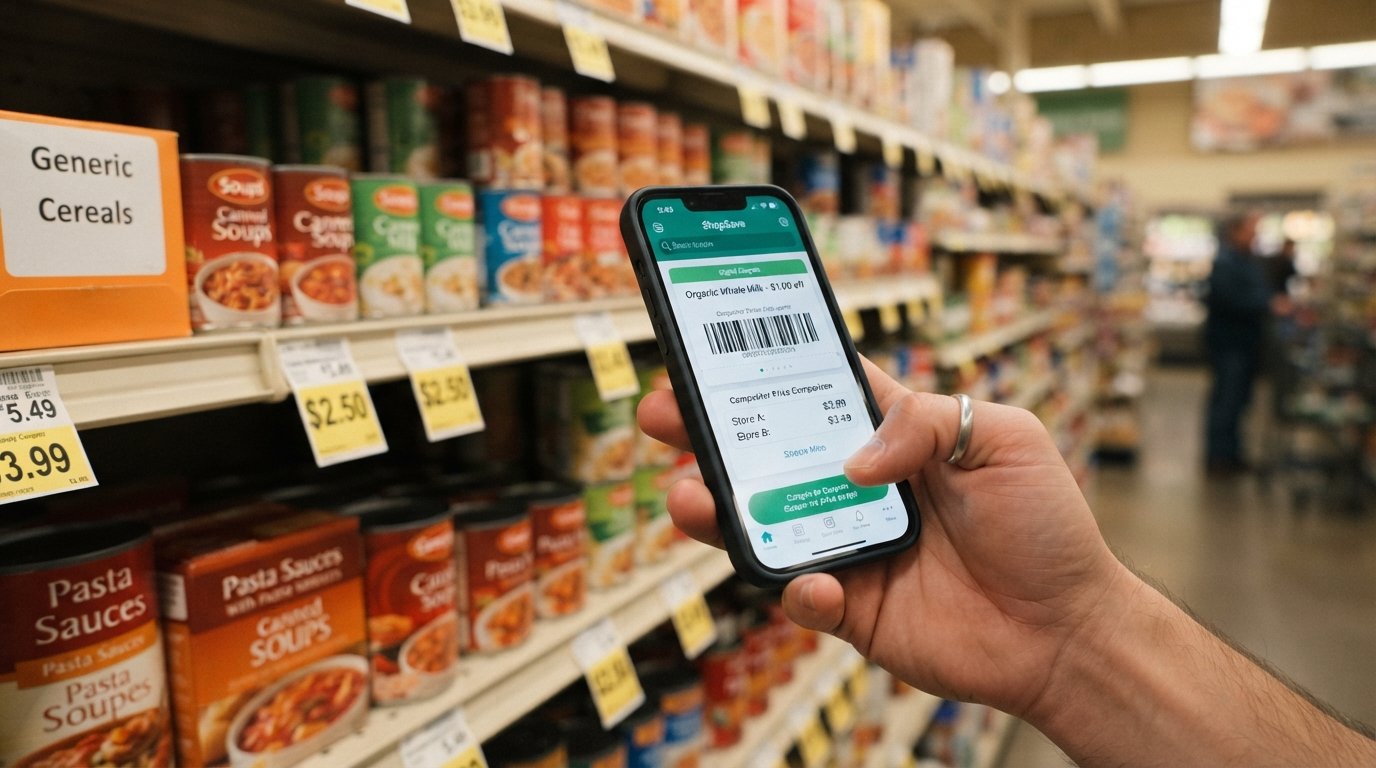
Try Price Matching and Comparison Apps
Some retailers still offer price matching, where they will match a competitor’s advertised price on an identical item. Apps and browser tools that track grocery prices across stores can also help you spot which chain is genuinely cheapest for your regular list, rather than relying on gut feeling.
Consider Discount Supermarkets
Stores like Aldi, Lidl, and Grocery Outlet consistently price staples like milk, bread, eggs, and chicken breast well below traditional supermarkets, sometimes by 40 to 60%. Even shopping there for your basics while filling in specialty items elsewhere can meaningfully lower your food spending.
Buy Smarter, Not Just Cheaper
Choose Store Brands and Generic Products
Store-brand and generic products are often made in the same factories as name brands, using very similar formulas. Swapping name brands for store-brand equivalents on pantry staples like flour, canned beans, pasta, and spices can save 20 to 30% without any real difference in quality.
Shop Seasonal Produce
Fruits and vegetables cost less, and taste better, when they are in season locally. Berries in the winter and squash in the summer are usually flown in from somewhere else, which drives up the price. A quick seasonal produce calendar (easy to find with a search for your region) can guide smarter produce choices year-round.
Buy in Bulk, But Only What You’ll Actually Use
Buying in bulk makes sense for pantry staples with a long shelf life like rice, oats, dried beans, and paper goods. It backfires when it leads to spoiled produce or freezer-burned meat you never got around to cooking. A good rule: only buy bulk quantities of things your household reliably finishes.
Stock Up on Frozen Foods
Frozen fruits and vegetables are flash-frozen at peak ripeness, which means the nutrition holds up well, and the price is usually a fraction of fresh, out-of-season produce. Frozen proteins bought on sale and portioned into the freezer are another easy way to lower your household grocery budget over time.
Take Advantage of Deals Without Overdoing It
Use Coupons Strategically
Digital coupons through store apps have mostly replaced the old clip-and-organize system, and they are faster to use. The trick is only using coupons for things you were already planning to buy. A coupon on a product you wouldn’t normally purchase is not a discount, it is an extra expense.
Join Store Loyalty Programs
Most major grocery chains offer free loyalty programs with app-exclusive discounts, fuel points, or personalized deals based on your shopping history. These cost nothing to join and often unlock savings you would not see otherwise.
Try Cashback Apps
Cashback apps let you scan receipts or link a card to earn money back on qualifying grocery purchases. It is not a huge windfall, but for a family already doing weekly shopping, it is essentially free money on purchases you were making anyway.
Watch for Grocery Store Deals and Sales Cycles
Grocery pricing tends to run in cycles, often four to six weeks, so items go on sale and then return to regular price on a rotating schedule. If you notice a staple you use often is on sale, that is usually a good moment to stock up a bit rather than buying only what you need for the week.
(Suggested in-content image placement: right after this section, showing a shopper comparing prices or checking a phone app in a grocery aisle.)
Reduce Food Waste to Stretch Your Budget Further
Food waste is one of the most overlooked money leaks in a grocery budget. The USDA estimates that a significant share of the food supply in the United States goes uneaten every year, and a lot of that happens right in home kitchens.
Use What You Have Before Buying More
Before writing a grocery list, check your fridge, freezer, and pantry first. A quick inventory prevents duplicate purchases and helps you plan meals around ingredients that are close to expiring.
Get Creative With Leftovers
Leftover rice becomes fried rice. Leftover roasted vegetables become a frittata or grain bowl filler. Treating leftovers as ingredients for a new meal, rather than a sad reheated plate, cuts waste and stretches your food budget noticeably.
Store Food Properly
Simple habits like storing herbs in water, keeping bread in the freezer instead of the counter past a few days, and organizing your fridge so older items are visible up front can extend the life of food you already paid for.
Cook at Home and Batch Prep When You Can
Restaurant and takeout spending is technically separate from a grocery budget, but the two are closely linked. When cooking at home feels like too much effort, convenience foods and takeout quietly eat into savings that groceries were supposed to provide.
Try Bulk Meal Prep
Cooking a big batch of a base ingredient, like grilled chicken, rice, or a pot of chili, on the weekend gives you a head start on several meals during the week. This reduces the temptation to order out on busy weeknights.
Keep Pantry Staples Stocked
A well-stocked pantry with staples like rice, pasta, canned tomatoes, beans, olive oil, and basic spices means you can always throw together an affordable, healthy meal, even on nights when you didn’t plan ahead.
Avoid Convenience Foods When You Can
Pre-cut vegetables, individually packaged snacks, and pre-made meals carry a real convenience tax, sometimes doubling the price compared to buying and prepping the whole ingredients yourself. These are fine occasionally, but relying on them regularly adds up fast.
Track Your Spending to Stay on Budget
Set a Weekly Food Budget
A weekly number is often easier to manage mentally than a monthly one. If your family’s target is $1,200 a month, that breaks down to about $277 a week, a number you can actually check against your receipt in real time.
Track Where the Money Actually Goes
A simple notes app, spreadsheet, or budgeting app can show you exactly where your grocery money is going. Many people are surprised to find that snacks, drinks, or “miscellaneous” items eat up a much bigger share of the budget than the actual meal ingredients do.
Common Grocery Shopping Mistakes to Avoid
Shopping without a list, going in hungry, and buying in bulk without a plan are the big three mistakes that quietly blow up a grocery budget. A few others worth watching for:
- Buying pre-cut produce out of habit instead of convenience necessity
- Ignoring unit prices and assuming larger packages are automatically cheaper
- Letting fresh produce go bad because too much was bought at once
- Skipping the pantry and freezer check before heading to the store
- Falling for “buy one get one” deals on items you don’t actually need
Fixing even two or three of these habits can make a noticeable difference within a single month.
Frequently Asked Questions
Final Thoughts
Cutting your grocery bill does not require extreme couponing or giving up the foods you enjoy. It comes down to a handful of consistent habits: planning meals around sales, what are smart ways to save money on groceries?comparing prices instead of guessing, buying smart rather than just buying cheap, and reducing the food waste that quietly drains your budget every week.
Pick two or three strategies from this list and try them for a month. Track the difference on your receipts, then add another habit once the first ones feel automatic. Small, steady changes are what actually stick, and they are what turn a stressful grocery budget into one that finally feels manageable.
Source Links Used:
- U.S. Bureau of Labor Statistics, Consumer Expenditure Survey (bls.gov)
- USDA Food Plans, Cost of Food Reports (usda.gov)
- Wikipedia: Grocery store overview (https://en.wikipedia.org/wiki/Grocery_store)
2 thoughts on “Smart Ways to Save Money on Groceries That Are Surprisingly Easy”