If you smoked at a party last weekend or ate an edible during a trip, you are probably wondering how long does it take for weed to be cleared from the body. The honest answer is that it depends on more than most people expect. Cannabis does not leave the body on a fixed schedule like caffeine or alcohol.
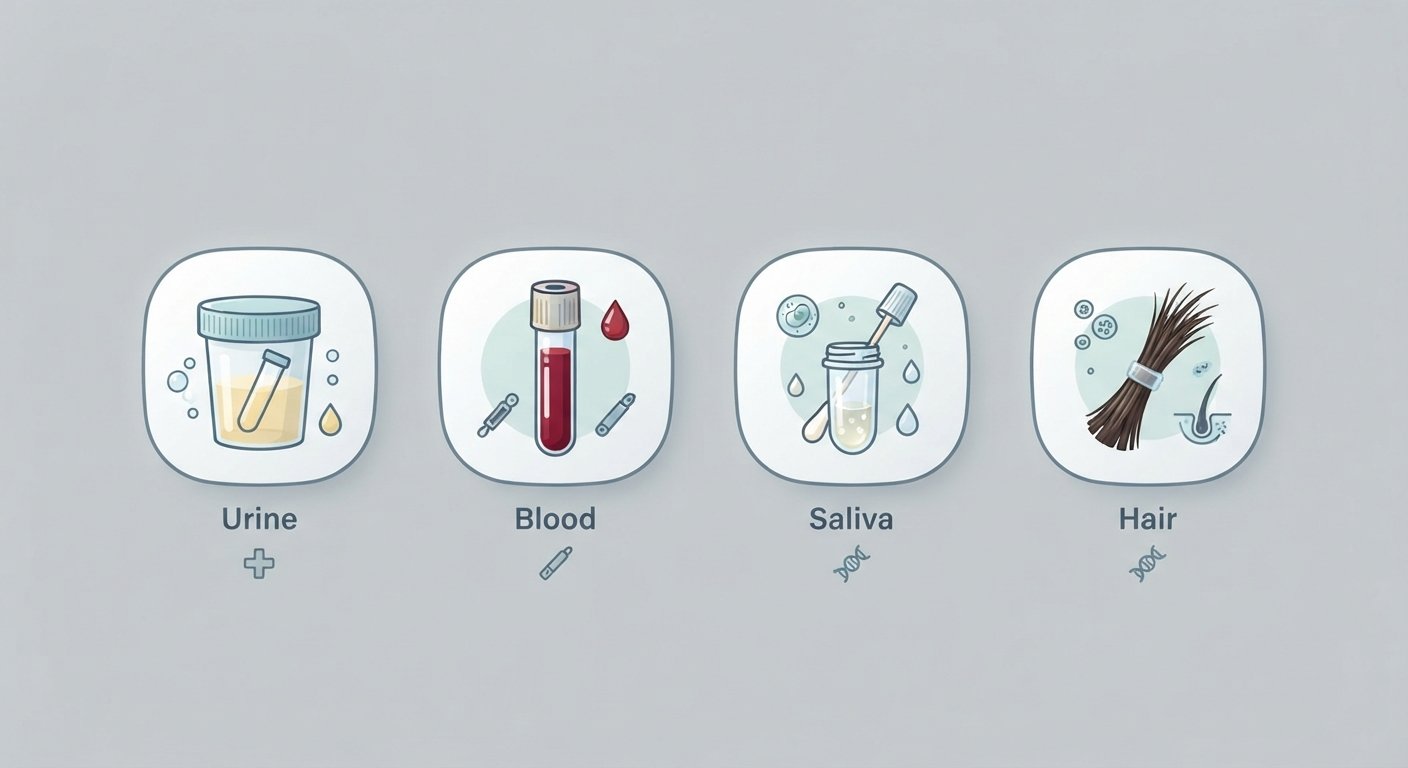
This guide walks through how long does it take for weed to be cleared from the body based on actual pharmacology, not guesswork. We will cover urine, blood, saliva, and hair testing windows, the biology behind why THC lingers, and what actually helps your body process it faster.
Why Weed Stays In Your System Longer Than Most Drugs
THC, or delta-9-tetrahydrocannabinol, is the main psychoactive compound in cannabis. Unlike alcohol, which dissolves in water and leaves the bloodstream within hours, THC is fat soluble. That single fact explains almost everything about marijuana detection windows.
When you smoke or eat cannabis, THC moves quickly into fatty tissue throughout the body, including the brain, liver, and adipose cells. Your liver then converts it into more than 80 metabolites, the most relevant being 11-hydroxy-THC and THC-COOH. THC-COOH is the metabolite most drug tests actually look for, and it has no psychoactive effect at all. It just sits in fat tissue and slowly releases back into the blood over days or weeks.
This is the core reason THC metabolism looks so different from person to person. Two people can smoke the exact same joint and test positive for completely different lengths of time afterward.
How Long Does Weed Stay In Your System By Test Type
Different drug tests look for different things, so the marijuana detection window changes depending on which sample gets collected.
How Long Does Weed Stay In Urine
A THC urine test is the most common method used by employers and probation programs, mainly because it is cheap and detects a wide window of past use. Urine testing does not measure active THC. It measures THC-COOH, the stored metabolite, which is why the numbers can look alarming compared to blood or saliva.
Rough estimates for weed clearance time in urine:
- One-time marijuana use: 3 days
- Moderate use, a few times a week: 5 to 7 days
- Daily use: 10 to 15 days
- Heavy, chronic cannabis use: 30 days or longer, and in some documented cases beyond 45 days
A 2017 review published in the National Institutes of Health’s clinical drug testing reference notes that occasional users typically clear cannabinoids from urine in 1 to 3 days, while chronic heavy users can test positive for 30 days or more after their last use. That range is wide on purpose because usage pattern matters more than almost anything else.
How Long Does Weed Stay In Blood
A THC blood test measures active, unmetabolized THC, so it reflects much more recent use. Blood testing is less common outside of accident investigations or DUI cases because the window is short.
- Occasional use: THC is typically undetectable in blood after 12 to 24 hours
- Frequent or heavy use: detectable for up to a few days in rare cases
THC concentrations in blood peak within minutes of smoking, then drop sharply within 3 to 4 hours as it redistributes into fat tissue. This is why blood tests are considered a better indicator of recent impairment than urine tests.
Weed Saliva Test Detection Time
Saliva testing has become more common for roadside and workplace testing because it is less invasive and reflects very recent use.
- Occasional use: usually clears within 24 hours
- Heavy use: can be detected for up to 72 hours
A cannabis saliva test picks up THC directly from oral fluid contamination after smoking or vaping, so it tends to correlate more closely with actual impairment than urine testing does.
THC Hair Test Detection Time
A hair follicle test has by far the longest marijuana testing window because hair grows slowly and traps metabolites as it does.
- Standard hair tests can detect cannabis use for up to 90 days
- Heavy chronic users may show detectable metabolites even further back, since a standard 1.5 inch hair sample represents roughly three months of growth
Hair testing is less common for pre-employment screening because it is more expensive, but it shows up frequently in child custody cases and certain safety-sensitive industries.
Factors Affecting THC Clearance
No two people process cannabis at the same speed. Here are the variables that actually move the needle on THC elimination.
Frequency Of Use
This is the single biggest factor. One-time marijuana use clears far faster than chronic cannabis use because THC has not had time to build up in fat stores. Frequent cannabis use means each new dose adds to a reservoir that has not finished clearing from the last one.
Body Fat Percentage
Because THC-COOH is lipophilic, it binds to fat cells. People with a higher body fat percentage generally have more storage capacity for THC metabolites, which can extend the release period. This does not mean thin people clear cannabis instantly, but body composition is a real variable that toxicologists account for.
Metabolism And Genetics
Liver enzyme activity varies from person to person. Some people naturally metabolize THC faster due to genetic differences in cytochrome P450 enzymes, which are responsible for breaking THC down in the liver.
Method Of Consumption
Edible THC detection tends to run longer than smoking because edibles pass through the liver before entering the bloodstream, producing more 11-hydroxy-THC, a potent metabolite with its own elimination timeline. Smoking weed detection time is often slightly shorter for occasional users since less THC reaches systemic circulation compared to oral ingestion.
Potency Of The Product
THC potency in legal dispensary products has climbed dramatically over the past two decades. According to the National Institute on Drug Abuse, average THC concentration in seized cannabis samples rose from under 4 percent in the mid 1990s to over 15 percent by the early 2020s, and many concentrates and vape products now exceed 40 percent THC. Higher potency means more THC available to store in fat, which can extend detection windows even for occasional users.
Hydration And Exercise Myths
There is a persistent belief that drinking water or exercising right before a test flushes THC out. Neither actually reduces the amount of THC-COOH stored in your body. Water dilutes urine temporarily, and labs specifically test for diluted specimens using specific gravity and creatinine levels, so an overly diluted sample often triggers a retest rather than a clean pass. Exercise can theoretically release stored THC from fat into the bloodstream faster, but this can just as easily raise concentrations temporarily rather than lower them, especially close to test day.
Marijuana Half Life Explained
The term marijuana half life refers to how long it takes for half of the THC in your body to be eliminated. This number varies enormously based on usage pattern.
Research published in the Journal of Analytical Toxicology has found THC-COOH shows a half-life of roughly 1.3 days in infrequent users, but that stretches to somewhere between 5 and 13 days in chronic heavy users. Because elimination follows a curve rather than a straight line, a longer half-life does not just add a few extra days. It compounds, which is why chronic users can end up with detection windows many times longer than occasional users.
THC Detox Time And What Actually Helps
There is no supplement, drink, or shortcut that removes THC from fat cells overnight. That said, there are legitimate factors that support the body’s natural process.
- Time is the only guaranteed variable. THC clearance happens as your body naturally metabolizes stored fat over days and weeks.
- Staying hydrated supports normal kidney function, though it will not accelerate actual clearance.
- Regular exercise over time, not right before a test, can help reduce overall body fat stores where THC-COOH accumulates.
- A balanced diet supports liver function, which is responsible for metabolizing THC into excretable compounds.
Be skeptical of detox kits marketed as guaranteed pass solutions. Most rely on masking or diluting a sample rather than removing THC, and many labs are specifically built to catch that.
Common Mistakes People Make Before A Drug Test
Assuming one timeline applies to everyone. A friend’s experience with a THC urine test tells you almost nothing about your own timeline, since frequency, body composition, and product potency all differ.
Over-hydrating right before a test. This often backfires because labs flag oddly diluted samples.
Underestimating edibles. THC edibles frequently produce longer detection windows than people expect because of how the liver processes them.
Ignoring product potency. Someone using a 30 percent THC concentrate is not comparable to someone smoking flower from a decade ago.
Waiting until the last minute. Since detox time cannot be rushed, planning weeks ahead is the only reliable strategy if a test is scheduled.
Frequently Asked Questions
The Bottom Line
There is no single answer to how long does it take for weed to be cleared from the body, because usage frequency, body composition, potency, and the type of test all shift the timeline in different directions. Occasional users often clear urine tests within a week, while chronic heavy users can test positive for a month or longer. Blood and saliva tests reflect much more recent use, while hair testing can reach back up to three months.
If you are facing a scheduled drug screening, the safest approach is giving your body real time rather than relying on last-minute tricks that rarely work and can sometimes make a result look worse.
This article is for informational purposes and is not medical advice. If you have concerns about cannabis use, dependency, or an upcoming drug test tied to legal or medical circumstances, talk to a healthcare provider.
Source referenced: National Institutes of Health, StatPearls: Cannabinoids
2 thoughts on “How Long Does It Take For Weed To Be Cleared From The Body A Complete Detection Timeline Guide”