
ICICI HRA Calculator: The Complete Guide to Maximizing Your House Rent Allowance
House Rent Allowance (HRA) is a critical component of salary structure for salaried employees in India. With urban rental markets on the rise and tax planning becoming more important than ever, understanding HRA and how to calculate the tax-exempt portion correctly can save substantial money. The ICICI HRA calculator is a commonly used digital tool that simplifies this task by applying Indian tax rules to give a reliable estimate of the HRA exemption you can claim. This long-form, in-depth guide explains the origins of HRA, the objectives behind it, how the ICICI HRA calculator works, its implementation nuances, state-level considerations, practical success stories, comparisons with other calculators, challenges users face, and the future outlook for HRA tools.

Understanding House Rent Allowance: Origins and Objectives
House Rent Allowance emerged as a tax mechanism to ease the housing burden on salaried taxpayers. Historically, the income tax laws in India recognized that many employees are required to live in rented accommodations due to work-related relocation, urbanization, or affordability constraints. HRA is an employer-paid allowance designed to provide relief for rental expenses and is partially exempt from tax subject to certain conditions.
The objectives of HRA are multifold. First, it aims to reduce the tax burden on employees who live in rented accommodations. Second, HRA encourages formalization of rental payments and helps employees offset a portion of their living costs. Finally, it provides employers with flexibility to structure compensation in ways that are efficient from a tax perspective while remaining compliant with tax statutes.
What Is the ICICI HRA Calculator?
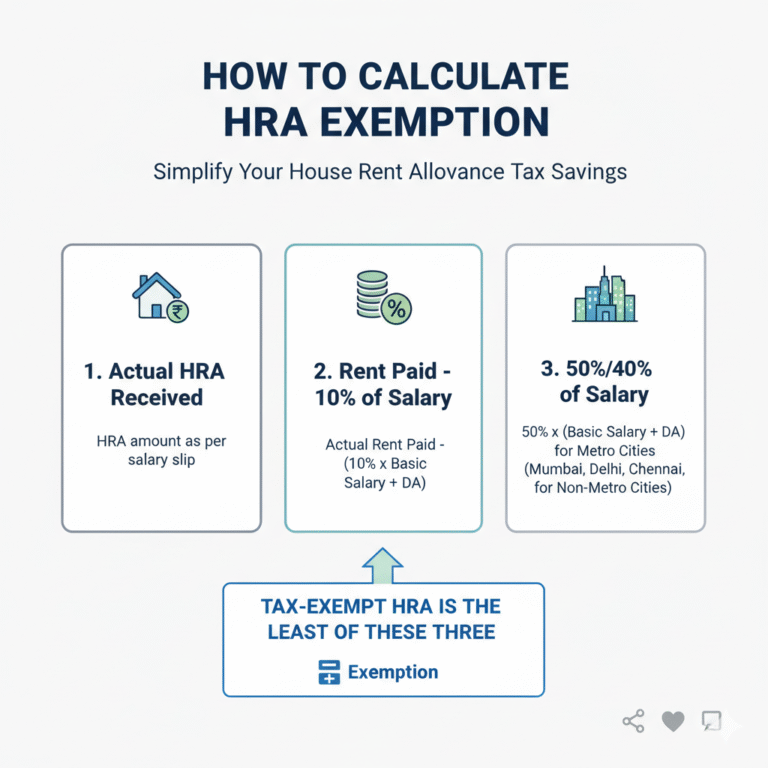
At its core, the ICICI HRA calculator is an online tool provided by ICICI Bank (and mirrored on several financial portals) that automates the computation of the exempt portion of your HRA under Section 10(13A) of the Income Tax Act and Rule 2A. It factors in your basic salary, dearness allowance (if applicable), actual HRA received, rent paid, and your residential location to determine the least of the three values used in tax calculations: actual HRA received; rent paid in excess of 10% of salary; or 50% (for metro cities) / 40% (for non-metros) of salary.
The ICICI HRA calculator is designed to be user-friendly. It asks for a handful of inputs and returns the tax-exempt amount along with the taxable HRA portion. For tax planning, this clarity is invaluable: it helps employees estimate how much tax they will owe, and choose whether to claim HRA exemption or not (in certain situations, claiming the exemption may not be optimal, particularly when other proofs like rent receipts are missing).
How the ICICI HRA Calculator Works: Step-by-Step
The computation for HRA exemption follows a well-defined rule: the exempt amount is the minimum of the following three figures:
- Actual HRA received from the employer.
- Excess of rent paid over 10% of salary (where salary is basic + dearness allowance, if any).
- 50% of salary if residing in a metro city (Mumbai, Delhi, Kolkata, Chennai) or 40% of salary for non-metro cities.
The ICICI HRA calculator automates these comparisons. Here is how it processes the data:
- Input collection: Users enter their basic salary, dearness allowance (if applicable), actual HRA paid by employer, annual rent paid, and whether they reside in a metro city.
- Computation: The tool computes 10% of salary and subtracts it from rent paid to get the second component, calculates the metro/non-metro percentage of salary, and compares all three figures to determine the smallest.
- Output: The tool displays the tax-exempt HRA amount and the taxable portion (actual HRA minus exempt amount), making it easy for the employee to include the correct figure in their income tax return or Form 16 reconciliation.
Because the ICICI HRA calculator consolidates steps that otherwise require manual calculations, it reduces errors and saves time—especially helpful for people juggling multiple allowances and deductions.
Inputs and Definitions: A Closer Look
To use an HRA calculator effectively, you must understand the key inputs and definitions:
- Salary: For HRA calculations, “salary” generally refers to basic salary plus dearness allowance (if the latter is part of retirement benefits). Many online calculators, including the ICICI HRA calculator, provide clear fields for basic pay and dearness allowance.
- Actual HRA Received: The allowance amount specified as HRA in your salary slip.
- Rent Paid: The annual rent you pay to the landlord. You should have rent receipts or a rent agreement to substantiate claims.
- Metro vs Non-Metro: The location classification affects the percentage applied to salary (50% for metros, 40% for non-metros).
- Rent Agreement and PAN of Landlord: If annual rent exceeds certain thresholds, or landlord is an individual receiving over a specified rent, the tax department may require recording the landlord’s PAN in your Form 16 or Form 12BB supporting documents.
The ICICI HRA calculator typically asks for these values and clarifies definitions to help users avoid common mistakes.
Practical Example: Using the ICICI HRA Calculator
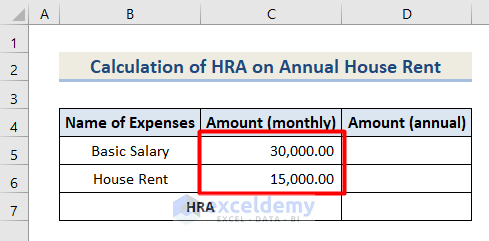
Imagine an employee with the following details: annual basic salary of INR 6,00,000, no dearness allowance, actual HRA received INR 1,20,000 per year, and annual rent paid INR 1,50,000. The employee lives in a non-metro city.
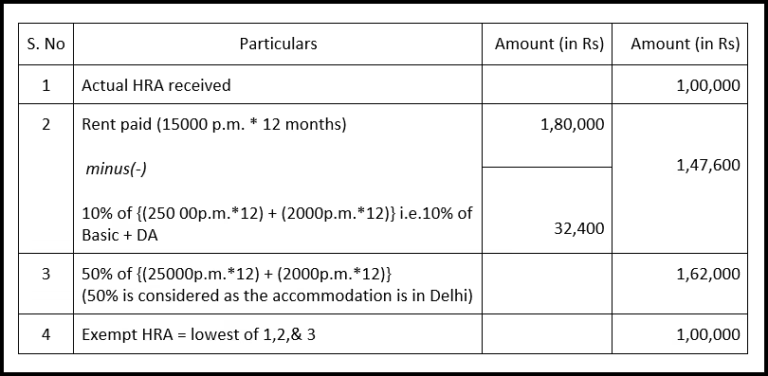
Manually, the calculation would be:
- Actual HRA received = INR 1,20,000.
- Rent paid minus 10% of salary = INR 1,50,000 − 10% of 6,00,000 = INR 1,50,000 − INR 60,000 = INR 90,000.
- 40% of salary (non-metro) = 40% of 6,00,000 = INR 2,40,000.
The minimum of these three numbers is INR 90,000, which is the exempt portion. The taxable HRA becomes INR 30,000 (actual HRA − exempt amount).
The ICICI HRA calculator performs this instantly and is especially helpful for employees who want to test multiple scenarios—like changing their declared rent, or estimating impact when moving from a non-metro to a metro city.
Implementation and Availability
ICICI Bank has integrated financial planning tools into its web portal and mobile platforms to support customers in salary structuring and tax planning. The ICICI HRA calculator is often part of a suite of calculators that includes income tax, provident fund projections, and salary breakup tools. These calculators serve multiple purposes:
- Employee self-help for tax filing and salary decisions.
- Recruiters and HRs for designing competitive pay structures.
- Financial advisors and personal finance enthusiasts who need quick computations.
Because the tool is widely accessible, it helps improve financial literacy by making HRA rules tangible and actionable.
State-Level and Regional Considerations
HRA rules are federal (central) tax rules applicable across India, but regional factors influence the inputs to the ICICI HRA calculator and the outcomes for taxpayers. Important regionally influenced elements include:
- Rent Differences: Urban centers and metropolitan areas tend to have higher rents. As a result, employees in metros may receive higher HRA components, making the 50% salary ceiling on exempt HRA more relevant.
- Cost of Living Variations: While the central tax structure does not change by state, the affordability and housing policies at the state level (like subsidized housing projects) indirectly affect individuals’ reliance on HRA.
- State-Specific Rent Control Laws: Some states have rent control legislations and tenant protection laws that affect how rents are structured, secured deposits, and periodic increments. These can affect the annual rent figure entered into the ICICI HRA calculator.
- Compliance and Documentation: In certain regions, landlords may prefer cash transactions or informal agreements. Claiming HRA exemption requires documentation (especially when rent exceeds thresholds), and regional customs can influence the ease of obtaining rent receipts and PAN details required for rigorous tax compliance.
Using the ICICI HRA calculator with accurate, region-specific rent figures ensures realistic exemption estimates and avoids surprises during tax filing.
Success Stories: When the Calculator Makes a Difference
Real-world cases illustrate how an HRA calculator can materially improve finances:
Case 1: Relocation and Tax-efficiency
A mid-level manager relocated from a small town to Mumbai. Her employer provided a higher HRA component, but she was unsure how much of it could be claimed as tax-exempt. By using the ICICI HRA calculator, she realized that a strategic adjustment in declared rent and timely submission of rent receipts would result in a significant reduction in tax liability for the fiscal year. The calculator enabled her to negotiate a better salary breakup with her employer, optimizing take-home pay.
Case 2: Joint Tenancy and Splitting Rent
Two roommates sharing an apartment could each claim HRA exemption for their share of the rent. The ICICI HRA calculator helped them simulate different sharing proportions, and determine the most tax-efficient split while ensuring that their combined exempt amounts matched their actual rent outlay. This saved each a meaningful tax amount annually.
Case 3: Documentation Compliance
A software engineer avoided an income tax notice by validating his HRA claim through the ICICI HRA calculator and assembling the required rent receipts, rent agreement, and PAN of the landlord. The clarity provided by the calculator made the submission process straightforward and defensible.
These examples show that beyond pure calculation, the ICICI HRA calculator supports better financial decisions, HR discussions, and tax compliance.
Common Challenges and Mistakes
Even with calculators simplifying the math, taxpayers can face pitfalls:
- Incorrect Salary Components: A common error is using gross salary rather than basic pay (+ dearness allowance) for HRA calculations. The ICICI HRA calculator usually clarifies what to enter, but users must ensure accuracy.
- Missing Documentation: Claiming HRA exemption without paying rent through verifiable channels or without proper rent receipts can invite scrutiny. The calculator may show a favorable result, but without documentation the claim is vulnerable.
- PAN and Rental Thresholds: If annual rent to a landlord exceeds certain amounts, employers may require the landlord’s PAN for TDS or disclosure. Ignoring this can complicate claims.
- Multiple Residences: Some employees live in their own home and pay rent for a second home due to work. The rules for double HRA claims are nuanced and require careful calculation and substantiation.
- Misclassification of City Type: Incorrectly marking metro vs non-metro status inflates or reduces the percentage ceiling used in the calculation. The ICICI HRA calculator typically lists metro cities, but users should double-check.
The calculator is a tool, but correct inputs and compliance remain the user’s responsibility.
Comparing the ICICI HRA Calculator with Other Tools
Multiple banks, financial portals, and tax-services offer HRA calculators. How does the ICICI HRA calculator compare?
- Ease of Use: ICICI’s interface is generally streamlined and integrated into its personal finance suite. This makes it convenient for existing customers.
- Accuracy: Most calculators follow the same statutory rules; so long as inputs and formulae are standard, the core output is consistent across tools.
- Additional Features: Some calculators embed side-by-side salary breakup suggestions, or allow batch calculations for multiple months. The ICICI HRA calculator often pairs with salary breakup and income tax calculators for holistic planning.
- Credibility: Being hosted by a major bank lends trust and perceived reliability, although the math behind all major HRA calculators is straightforward and identical.
From a functional perspective, differences are minor; the real value is in user interface quality, additional planning features, and trust in the host institution.
HRA in the Context of Broader Policy Frameworks
While HRA is a personal tax provision, it ties into wider policy themes: housing affordability, urban migration, and social welfare initiatives. Consider these linkages:
- Urbanization and Rental Markets: Rapid urbanization increases rental demand. HRA acts as a stabilizer by relieving earning households from some of the rental burden.
- Affordable Housing Initiatives: Central and state government programs promoting affordable housing can reduce reliance on rent and therefore change the landscape of HRA usage over time.
- Women Empowerment and Social Inclusion: Women moving to cities for work rely on HRA when they cannot afford home ownership. Tools like the ICICI HRA calculator can help women plan financially, compare rental options, and negotiate salary packages that reflect living costs.
- Rural Development and Backward Regions: As job opportunities expand in tier-2 and tier-3 towns, HRA policies that favor metro vs non-metro calculations can have redistributive implications. A robust ICICI HRA calculator allows employees in smaller cities to see how their HRA compares and plan accordingly.
- State-Level Benefits: Taxation and allowances interact with state social welfare schemes (for example, housing subsidies or state-specific home-buying incentives). These can change personal decisions about renting vs owning and thus affect how much individuals rely on HRA calculators.
Framing HRA within this broader policy matrix enables a more strategic view of personal finance choices.
Documentation and Compliance: What Tax Authorities Expect
To substantiate HRA claims, employees should maintain clear documentation:
- Rent Receipts: Signed receipts indicating monthly rent payments, name of tenant, landlord name, address, and period.
- Rent Agreement: A formal lease or rental agreement covering the financial year helps establish tenancy.
- PAN of Landlord: When rent exceeds thresholds (and in certain employer policies), the landlord’s PAN is required for disclosure.
- Banker’s Proof or Digital Payments: In cases where cash payments raise suspicion, digital transfers provide stronger evidence.
- Form 12BB: This is the employee declaration form to claim various tax exemptions, including HRA. Employers use it to validate claims and process tax deductions at source accordingly.
Filling out the ICICI HRA calculator is the first step; ensuring documentation is equally crucial.
Tax Planning Strategies Using an HRA Calculator
An HRA calculator helps more than confirm a number: it enables planning. Strategies include:
- Salary Restructuring: Use insights from the ICICI HRA calculator to negotiate a compensation mix with a higher HRA component or optimized basic pay that increases tax efficiency.
- Joint HRA Claims: Married couples living together but with separate rental agreements can coordinate HRA claims. The calculator can show benefits of splitting rent claims in different proportions.
- Rent vs Own Decisions: For employees evaluating whether to rent or buy, the HRA calculator is a data point in assessing tax advantages of renting in the near term.
- Preemptive Documentation: Knowing the exempt amount allows employees to collect and preserve rent receipts in a timely fashion.
These strategies, when applied with the calculator, lead to smarter financial outcomes.
Challenges and Limitations of Digital Calculators
Despite their usefulness, HRA calculators have limitations:
- They rely on user-provided inputs; garbage in, garbage out applies.
- They cannot replace professional tax advice in complex scenarios—like non-standard salary components, reimbursements, or when multiple residences and rentals are involved.
- Legal changes (amendments to tax laws) can make calculators outdated unless regularly updated.
- Behavioral aspects—like reluctance to formalize rent or hesitance to request PAN from landlords—aren’t solved by calculators.
Therefore, the ICICI HRA calculator is an excellent first stop but not the final word in complex tax circumstances.
Future Prospects: Smarter HRA Tools and Integrations
Looking forward, HRA calculators are likely to evolve in several ways:
- Integration with Payroll Systems: Tight coupling between employer payroll and tools like the ICICI HRA calculator could auto-populate salary and HRA components, reducing friction.
- Real-Time Document Verification: Future tools might allow uploading rent receipts or rent agreements for instant validation, possibly via secure document verification APIs.
- Localized Rent Benchmarks: By integrating rental market data, a calculator could flag unusually high or low rents compared to market averages, helping users make informed decisions.
- AI-Powered Advice: Beyond computation, AI can suggest the optimal salary structure, estimate TDS implications, and create tailored checklists for documentation required to claim HRA.
- Mobile-First Experiences: Enhanced mobile integration, notifications for documentation submission deadlines, and tax-filing prompts could become standard, increasing usage and compliance.
ICICI and other financial institutions are well-placed to evolve their HRA calculators into comprehensive financial planning assistants.
Comparing HRA with Other Housing-Related Tax Benefits
HRA is one piece of the housing and taxation puzzle. Other benefits include deductions under Section 80C (for principal repayment of housing loan), and Section 24(b) (for interest on housing loan). Comparing them:
- HRA vs Home Loan Interest Deduction: For homeowners with a home loan, interest payment deductions under Section 24(b) can be substantial. The ICICI HRA calculator can help compare whether renting and claiming HRA, or buying and claiming interest deductions, is more advantageous for a given year.
- Principal Repayment vs HRA: Principal repayment under Section 80C competes with other 80C investments. Depending on the tax bracket and liquidity preferences, employees may prefer higher HRA with renting and invest elsewhere.
- Double Benefits: In limited circumstances—like when an employee owns a home at their hometown but rents at the workplace—they might claim both HRA and home loan interest (subject to legal constraints and proofs). A calculator can help simulate outcomes, but professional advice is often necessary.
Understanding these trade-offs is central to maximizing overall housing-related tax benefits.
Practical Tips for Using the ICICI HRA Calculator Effectively
To get the most from the ICICI HRA calculator, consider these tips:
- Use Basic Pay Correctly: Ensure you enter basic salary and dearness allowance accurately, not gross salary.
- Keep Rent Receipts Handy: Match the rent entered in the calculator with your receipts, and ensure they’re consistent across months.
- Classify City Properly: If you live in an area near metropolitan boundaries, confirm whether it’s classified as metro for HRA purposes.
- Run Multiple Scenarios: Try variations—different rent amounts, number of months rented, or alternate salary splits—to identify the best strategy.
- Pair with Other Calculators: Use an income tax calculator and salary breakup tool alongside the ICICI HRA calculator for holistic planning.
These practical habits increase the reliability of the results and improve tax readiness.
Frequently Asked Questions
Conclusion: Empower Your Financial Decisions with the ICICI HRA Calculator
The ICICI HRA calculator is more than a quick arithmetic helper; it is a gateway to smarter housing and tax decisions. In an era of rising rents, urban migration, and complex compensation structures, having access to a reliable calculator that applies statutory rules systematically helps individuals, HR professionals, and financial planners make informed choices. By understanding the inputs, maintaining documentation, recognizing regional nuances, and combining the calculator’s output with broader housing-related tax planning, employees can meaningfully improve their take-home pay and tax posture.