
Learning to type used to mean a dog-eared workbook, a clunky desktop program, and a lot of guesswork about whether you were actually improving. Typing.com changed that by putting the entire process online and making it free for anyone who wants to use it.
If you searched for typing.com because you need to log in, assign lessons to a class, or just want to know if it’s worth your time, this guide covers all of it. We’ll walk through what typing.com actually offers, how to use every major feature, how it stacks up against other typing tutors, and what the research says about building real typing speed.
What Is Typing.com?
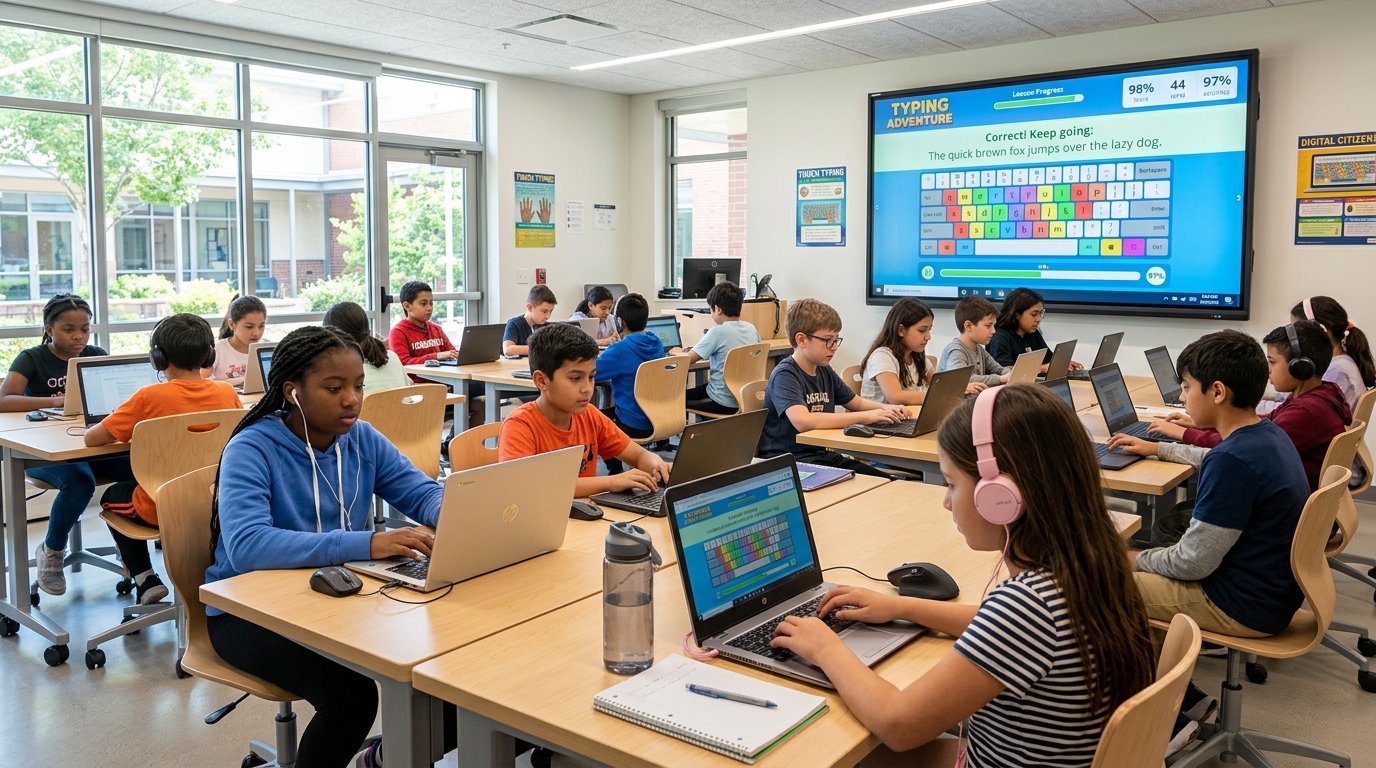
Typing.com is a free, browser-based keyboarding platform built for students, teachers, and independent learners. It’s part of the Teaching.com family of educational tools, and it’s used in classrooms across the United States as a core part of technology and computer literacy instruction.
The platform combines a few things that used to require separate software:
- Step-by-step touch typing lessons
- Timed typing tests to measure words per minute (WPM) and accuracy
- Typing games that reinforce finger placement
- A classroom dashboard for teachers to assign work and track progress
- Digital citizenship and basic coding lessons layered into the curriculum
Typing.com reports serving a huge number of students and teachers across K through 12 schools, which is part of why it consistently ranks as one of the most visited typing practice sites in the country. Homeschool families and adult learners use it too, even though the lesson design leans toward a school setting.
How to Log In to Typing.com
One of the most common searches related to this platform is simply “typing.com login,” and for good reason. The login flow depends on whether you’re a student, a teacher, or an individual learner.
Typing.com Student Login
Students usually get a class code or a direct link from their teacher. From the typing.com homepage, a student clicks the student login option, enters their class code or personal credentials, and lands directly on their assigned lessons. Many schools connect typing.com to Google Classroom or Clever, so students can sign in with a school Google account and skip typing a password altogether.
Typing.com Teacher Login
Teachers create an educator account first, which gives access to a dashboard for building classes, assigning specific lessons, and pulling reports. Once that account exists, the teacher login process is a standard email and password sign-in, or single sign-on through a school’s existing system. From there, a teacher can see exactly which students have completed which lessons and how their speed and accuracy have changed over time.
Signing Up Without a School
If you’re an adult or a homeschool parent without a class code, you can create a free personal account directly on the site. Typing.com does not require personal identifying information to use the core lessons, which matters for parents who are cautious about what student data gets collected online.
Typing.com Lessons and Curriculum
The lesson library is organized by grade band, which is one of the platform’s real strengths compared to typing sites that just throw random text at you.
Elementary Lessons
Younger students start with basic finger placement on the home row, simple letter drills, and short games that keep attention spans engaged. The pacing is slower and more visual, since the goal at this stage is building muscle memory rather than speed.
Middle and High School Lessons
Older students move into full paragraph typing, punctuation, number rows, and symbol practice. This is also where the digital citizenship content shows up, covering topics like online safety and responsible internet use alongside the typing instruction.
Typing.com for Adults
There’s no separate “adult track,” but the free lessons work fine for grown learners who never had formal instruction. Most adults can skip straight to intermediate lessons if they already know rough finger placement and just need to build speed and accuracy.
Typing.com Typing Test and Speed Test
The typing test feature lets you type a passage for a set amount of time, usually one to five minutes, and get an instant WPM and accuracy score. This is the fastest way to establish a baseline before starting any lesson plan.
A few things worth knowing about the typing.com speed test:
- WPM is calculated using the standard formula of five characters counting as one word
- Accuracy is tracked separately, since raw speed with a lot of mistakes isn’t the same as usable typing skill
- Teachers can assign timed tests as graded assignments and export results
According to research published in Cognitive Research: Principles and Implications, total accumulated keyboard exposure over time is a stronger predictor of typing speed than short structured drills alone. That’s a useful reminder that consistent typing practice, not just occasional testing, is what actually moves the needle.
Typing.com Practice and Exercises
Beyond the graded lessons, typing.com practice mode lets students or adults drill specific weak spots without following the full curriculum. This is helpful once you’ve finished the core lessons but still fumble on certain letter combinations, punctuation, or number rows.
A realistic weekly practice routine looks something like this:
- Two minutes checking posture and hand position
- Eight to ten minutes on structured lessons
- Three minutes drilling your weakest keys
- Two minutes on a timed accuracy exercise
- One typing test per week to track progress, rather than testing after every session
Testing too often can actually distract from technique, since learners start typing for the score instead of focusing on form. Weekly measurement gives a cleaner picture of real improvement.
Typing.com Games for Students
Typing.com keeps a library of typing games that turn drills into something closer to play. These games reinforce the same finger placement taught in lessons but wrap it in a scoring system, obstacles, or a race against the clock.
Games matter more than they might seem for younger learners. Repetition is what builds muscle memory, and pure repetition gets boring fast for a seven-year-old. Wrapping that repetition in a game keeps kids at the keyboard longer, which is exactly the kind of accumulated practice that builds real speed over time.
Typing.com for Teachers and Classroom Management
The teacher dashboard is where typing.com separates itself from most other free options. Inside the classroom tools, a teacher can:
- Create multiple classes and organize students by period or grade
- Assign specific lessons, tests, or custom content
- Build custom lessons for cross-curricular reinforcement, like typing vocabulary lists for a science unit
- Pull real-time reports on completion, speed, and accuracy
- Integrate with Google Classroom and Clever for faster rostering
District-level support is included at no cost, without limiting content or administrative features, which is unusual for a free education tool. Most competitors reserve that kind of classroom management for a paid tier.
Is Typing.com Free
Yes, the core experience is free. Lessons, typing tests, most games, and the basic teacher dashboard cost nothing to use. The free tier does include advertisements, which is how the platform stays free for schools and individual users.
There is a paid premium tier aimed at schools, priced at roughly a dollar per student per year. The main benefit is removing ads, since the free version’s ads are more of an annoyance than a real obstacle to learning. There isn’t a separate individual premium plan for adults outside of a school account, so independent adult learners either tolerate the ads or look at a different tool.
How to Improve Typing Speed With Typing.com
Speed comes from technique first and repetition second. Here’s a practical approach that works whether you’re a student or an adult brushing up on keyboarding skills.
Start with proper finger placement. Skipping this step to “just get faster” almost always backfires, because bad habits are harder to unlearn than they are to build correctly the first time.
Accept a temporary slowdown. Anyone switching from hunt-and-peck typing to proper touch typing gets slower before they get faster. That’s normal. The brain needs time to build new key-to-finger connections.
Use the lesson sequence instead of skipping around. The structured path from home row to full sentences exists for a reason. Random practice tests are fine later, but they’re a weak substitute for structured lessons early on.
Track progress weekly, not daily. Real gains show up over weeks, not single sessions. Recording WPM once a week gives a much more honest trend line than testing after every ten-minute session.
Don’t chase inflated numbers. Ignore any claim promising to double your speed in a week. Genuine typing speed improvement is gradual and built on repetition, not shortcuts.
For reference, typing.com and similar platforms generally put average typing speed benchmarks around 8 to 20 WPM for elementary students, 20 to 30 WPM for middle schoolers, 30 to 40 WPM for high schoolers, and roughly 40 WPM or higher for college students and adults. Adults who type daily in an office setting frequently land in the 45 to 65 WPM range, while data entry and administrative roles often push into the 65 to 90 WPM range.
Typing.com Compared to Other Typing Tutors
Typing.com isn’t the only option, and it’s worth knowing where it fits among the most common alternatives.
TypingClub is typing.com’s closest direct competitor, with a similarly structured lesson path built for beginners and schools. The two are frequently compared side by side because both target the same K-12 audience.
Keybr takes a different approach, using an algorithm that generates lessons based on your specific weak letters rather than following a fixed curriculum. It’s popular with intermediate typists who already know the keyboard layout and want to fix specific gaps.
Nitro Type turns typing into a competitive racing game, which appeals to students who respond better to competition than structured lessons.
Ratatype offers a more course-like structure with certificates at the end, which some adult learners like for resume purposes.
10FastFingers is built almost entirely around quick speed tests rather than instruction, making it a good supplement once someone already knows how to type.
The honest takeaway: typing.com is the strongest all-in-one choice for beginners, classrooms, and anyone who wants lessons, tests, games, and reporting in one place without paying anything. More advanced or adult typists sometimes add a second tool like Keybr for targeted weak-key practice once they’ve outgrown the beginner curriculum.
Common Mistakes People Make When Learning to Type
Looking at the keyboard constantly. This is the single biggest habit that slows down touch typing progress. Covering the keyboard or using a keyboard skin during early lessons can help break the habit.
Skipping posture and hand position. Wrist position affects both speed and long-term comfort. Rushing past the setup lessons to get to typing tests usually shows up later as a speed plateau.
Testing too frequently. Daily speed tests can create anxiety around the number instead of the skill. Weekly testing is plenty.
Comparing speed to the wrong benchmark. A middle schooler comparing their WPM to a professional data entry worker is comparing apples to oranges. Age and experience level both matter when judging what’s “good.”
Assuming games alone will build the skill. Games reinforce technique, but they work best alongside structured lessons, not as a replacement for them.
Frequently Asked Questions
Final Thoughts
Typing.com earns its popularity by covering the entire learning process in one free platform: structured lessons, honest speed tests, engaging games, and classroom tools that actually work for teachers managing dozens of students. Whether you’re a student assigned to it by a teacher, a parent looking for a homeschool keyboarding curriculum, or an adult who never got formal typing instruction, the path forward is the same. Start with the lessons in order, measure your typing speed once a week, and give the process a few consistent weeks before judging the results.
Suggested Internal Links (for the content team to add on typing.com or the client site)
- Anchor text “student login” → typing.com student sign-in page
- Anchor text “teacher login” or “educator account” → typing.com teacher/educator sign-up page
- Anchor text “typing lessons” → typing.com student lessons page
- Anchor text “typing test” → typing.com speed test page
- Anchor text “classroom dashboard” → typing.com teacher/classroom page
- Anchor text “digital citizenship lessons” → typing.com digital literacy curriculum page
Source Links
- https://www.typing.com/
- https://www.typing.com/teachers
- https://www.typing.com/student/lessons
- https://en.wikipedia.org/wiki/Touch_typing
- https://www.typequicker.com/average-typing-speed
- https://www.typespeedtest.com/blog/average-typing-speed/
2 thoughts on “Typing.com Makes Learning to Type Ridiculously Easy for Every Student”